
Back to Basics: Why the Boring Stuff Still Wins B2B Deals
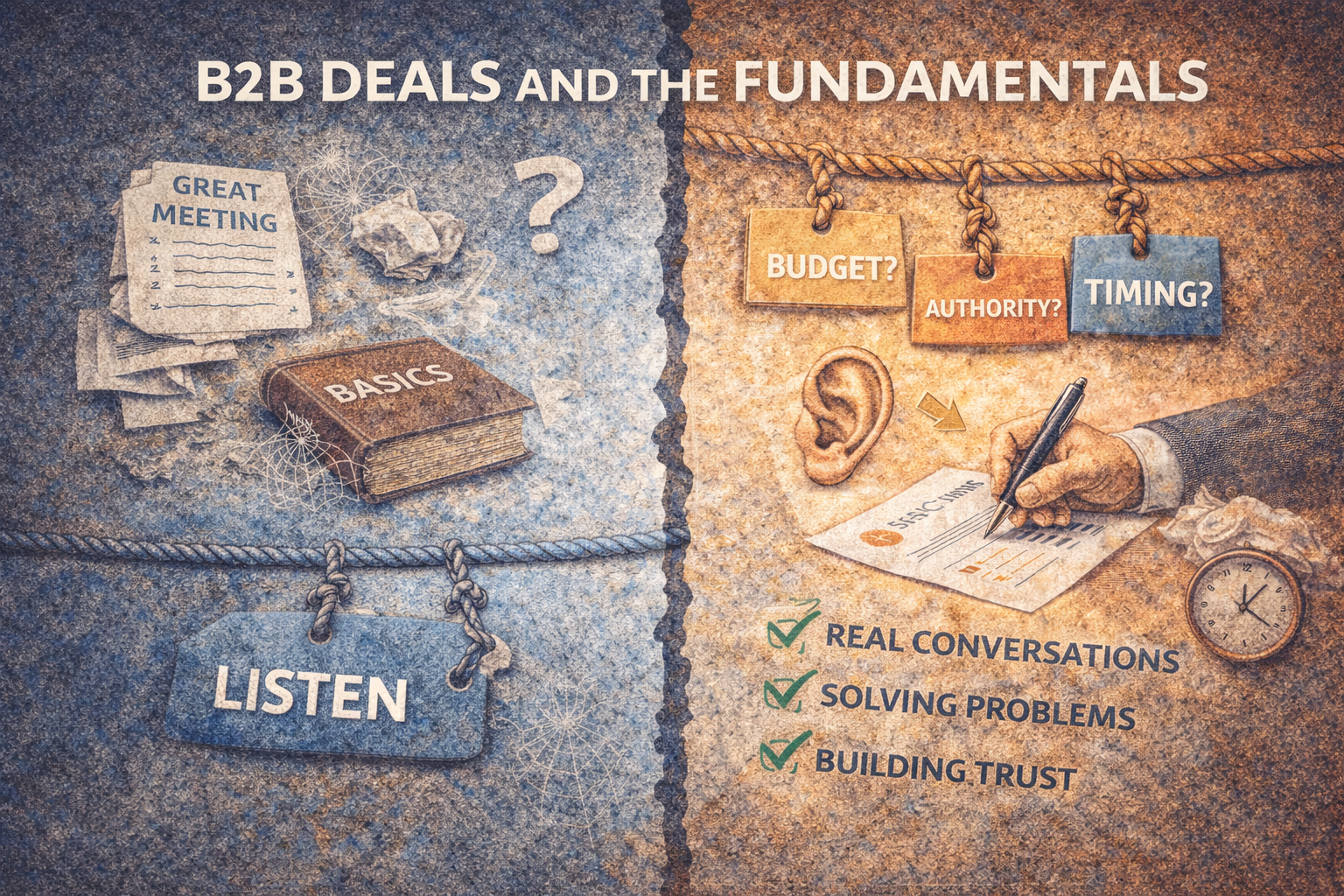
Let’s rewind to the fundamentals.
Not because they’re easy.
Because they still work — especially when things get messy.
I see this pattern constantly: in negotiations, customer meetings, and complex deals. And if I’m honest, I’ve caught myself doing it too. Under time pressure, armed with experience, confident in instinct — and suddenly the basics slip. When they do, results usually follow them out the door.
What’s consistently surprised me is this: when I deliberately return to a few core frameworks I learned early in my career, outcomes improve almost immediately. Conversations become clearer. Decisions happen faster. Emotions calm down. Predictability increases.
No hacks. No shiny acronyms. Just disciplined execution.
In this piece, I want to revisit a handful of methods most of us were taught — and then quietly stopped applying with rigor:
BANT, to qualify reality instead of optimism
ZOPA, to understand where agreement is actually possible (more on this later)
The Harvard negotiation model, to separate people from problems (also for another time)
And “L” for Listening — the most underrated skill in the room
Used consistently, these basics raise deal quality, negotiation strength, and personal confidence. Not because they’re clever — but because they force clarity, humility, and structure.
This isn’t about theory. It’s about what actually moves deals forward.
The Meeting That “Went Well” (But Didn’t)
After hundreds — likely thousands — of customer meetings, one pattern shows up again and again.
The meeting feels good.
The discussion is positive.
Everyone leaves satisfied.
And yet one or two critical points were never properly addressed.
Sometimes you notice it immediately. Sometimes it hits you on the walk back to the car. Sometimes you see it weeks later when momentum stalls. And sometimes it’s hard to intervene — especially when you’re supporting a colleague or senior leadership is present and egos need to be protected.
Yes, you can follow up later.
Yes, you can clarify by email.
But experience has taught me this: the most important questions are best addressed in the meeting itself.
That’s where BANT earns its keep.
BANT, Without the Sales Clichés
BANT isn’t a script. It’s a mental checklist that ensures reality is covered — not just hope.
B – Budget
Is there a budget? Who owns it? Is it approved? Is it fixed, or dependent on competing quotes?
This isn’t rude. It’s professional — and often the most important question in the room.
A – Authority
Who actually decides?
Engineers often shape the solution. Purchasing may negotiate. Leadership may approve. Understanding this allows you to build the right selling center: engineering to engineering, sales to procurement, management to management. Structure creates momentum.
N – Need
What is truly required?
A prototype? A full rollout? Services? A defined RFQ? Clear deliverables?
This is where early engineering involvement pays dividends. When engineering teams collaborate well, trust forms quickly — sometimes accounting for half the battle.
One common issue I see is the opposite: capable engineers unintentionally undermining confidence by over-emphasizing uncertainty. Technically honest? Yes. Commercially risky? Often.
Alignment before the meeting matters. A short internal briefing can clarify what’s proven, what’s new but manageable, and how risks are framed externally. This isn’t about silencing engineers — it’s about responsible communication.
T – Timeline
When does this actually need to happen?
Is this urgent? Exploratory? Waiting on board approval? Timing dictates prioritization, resource allocation, and credibility.
Senior professionals sometimes avoid this question out of politeness. They shouldn’t. Asked well, it signals experience — not pressure.
And write it down. A proper Minutes of Meeting aligns everyone and dramatically improves outcomes, even when deals are lost.
L Is for Listening (And Restraint)
I’m not a natural listener.
I talk. I explain. I enjoy demonstrating understanding. For years, that impulse worked against me.
So I built a habit: before meetings, I write a large “L” in my notebook.
It reminds me to listen first, ask instead of explain, and qualify reality instead of showcasing expertise.
When I listen properly, budgets reveal themselves. Authority structures surface. Timelines sharpen. And when I finally speak, it actually moves the deal forward.
Sometimes the most senior move in the room isn’t delivering the smartest insight — it’s asking the right question and staying quiet long enough to hear the real answer.
Questions like:
“How will you actually make this decision?”
“What do you find most compelling about our approach?”
Those answers change everything — negotiation dynamics, pricing power, effort allocation, and risk tolerance.
Not asking them isn’t polite. It’s blind.
Clarity early is respectful — to your resources, your colleagues, and the customer.
The best deals aren’t won by the cheapest quote.
They’re won because there’s a clear reason to choose you.
And that reason only surfaces if you ask — and listen.
