
Selling Without the Sleaze: A Founder’s Guide to Authentic B2B Sales
Starting a business often means wearing multiple hats. Founder, strategist, problem-solver… and yes, salesperson. Unfortunately, many founders discover this last role with the same enthusiasm people reserve for surprise dental work.
If you’ve ever thought, “I built a business to avoid sales, not become one,” you’re in good company.
The discomfort around B2B selling is real. Cold outreach can feel intrusive, talking about your offer may sound self-congratulatory, and somewhere along the timeline of modern business, sales developed a reputation for being pushy, theatrical, and occasionally cringe-worthy.
Here is the reality: effective B2B selling should feel none of those things.
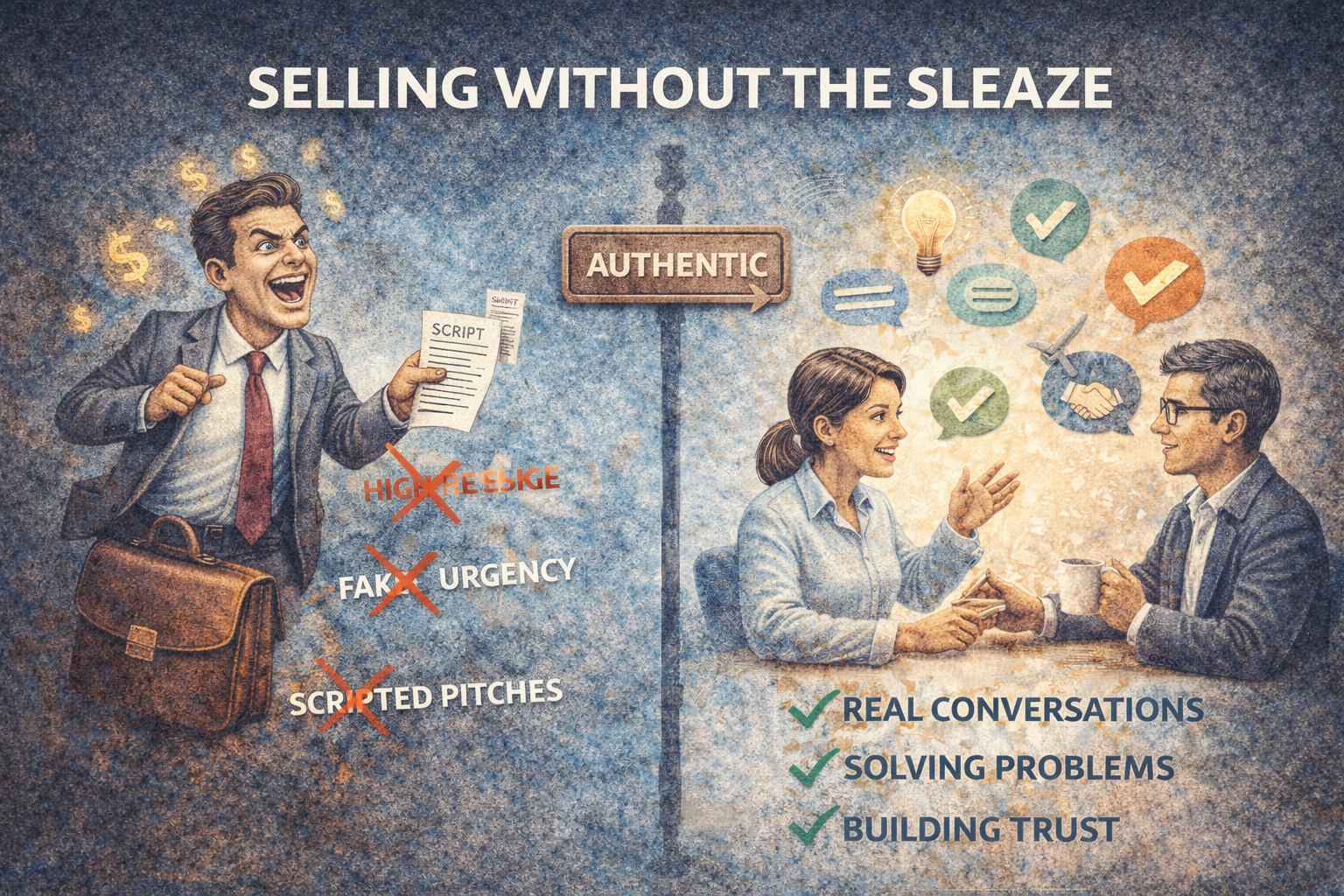
Authentic selling is simply the practice of having honest conversations with the right people, solving meaningful problems, and building trust without gimmicks, artificial urgency, or personality makeovers.
Let’s unpack how founders can sell successfully — without needing a shower afterward.
Why Sales Feels So Awkward for Founders
Most founders did not launch their companies because they dreamed of negotiating contracts.
You likely started because you:
Excel at your craft
Identified a problem worth fixing
Wanted greater autonomy or impact
Sales was supposed to support the mission, not become the mission.
To make matters worse, many of us learned what “sales” looks like from its worst performers:
Hyper-aggressive cold calls
Inflated promises
Scripts with all the warmth of a parking ticket
Closing tactics that feel more like emotional arm-twisting
It is no wonder founders hesitate. But the issue is not that you are bad at sales — it is that you have been shown a distorted version of what good sales actually is.
A Better Perspective: Selling Is Helping
At its core, B2B sales is not about persuading someone to buy what they do not need. It is about helping a business make a smart decision.
That means:
Understanding the real challenge
Determining whether you can genuinely help
Making the path forward clearer for the buyer
When done properly, sales resembles a structured conversation rather than a theatrical performance.
If you have ever offered professional advice, guided a client through a decision, or recommended a better approach, you have already been selling — you just did not call it that.
Authentic selling simply adds intention and consistency to something you are likely already doing.
Clarity Beats Confidence Every Time
Many new founders assume they need more confidence before they can sell effectively. In truth, confidence tends to show up once clarity arrives.
Be crystal clear on:
Who you help
The problem you solve
Why that problem matters
When you can say, “I help this specific type of business achieve this specific outcome,” selling becomes far less stressful. You are no longer trying to appeal to everyone — just the people who actually need you.
Buyers trust businesses that understand them. Clarity accelerates that trust.
Replace Pitches with Conversations
Nothing triggers the sales “ick” faster than launching into a pitch five minutes into a conversation.
Authentic selling prioritizes curiosity over persuasion.
Strong sales discussions focus on:
Asking thoughtful questions
Listening more than speaking
Understanding context before proposing solutions
Instead of declaring the brilliance of your product, try asking, “How are you currently approaching this?”
Your role is not to impress. It is to determine whether a meaningful problem exists and whether solving it makes sense right now.
Occasionally, the most honest outcome is deciding not to work together — and that honesty strengthens your reputation far more than forcing a deal.
Lose the Script, Keep the Structure
Authenticity does not mean improvising your way through high-stakes conversations.
Structure is valuable, especially in B2B environments where decisions involve budgets, committees, and spreadsheets that seem to multiply overnight.
A simple framework might include:
Context: What is happening inside the buyer’s business?
Impact: Why does the issue matter?
Options: What have they tried?
Fit: Does your solution genuinely align?
Buyers are not looking to be “closed.” They want confidence that they are making a sound decision.
Trust First, Revenue Second
Trust is the real currency of B2B sales.
Founders sometimes rush commitments — understandable when cash flow is involved — but pressure erodes trust at remarkable speed.
When buyers feel comfortable, conversations become more transparent and decisions improve.
Ironically, slowing down often speeds up the right deals.
Sales That Feel Good Are Sales You’ll Actually Do
The greatest advantage of authentic selling is sustainability.
When your approach:
Reflects your values
Sounds natural
Avoids theatrics
You are far more likely to stay consistent, enjoy the process, and cultivate long-term relationships.
And in business, consistency quietly outperforms bursts of intensity.
No Personality Upgrade Required
You do not need to become louder, sharper, or more aggressive to succeed in B2B sales.
You need:
A clear message
Genuine interest in your buyers
A reliable conversational structure
That is authentic selling — practical, human, and highly effective.
If selling currently feels uncomfortable, treat that discomfort as feedback on your method, not your capability.
After all, you started your business to help people. Selling is simply how you begin that help.
