
Why Great Suppliers Stay Invisible (And How B2B Marketplaces Fix It)
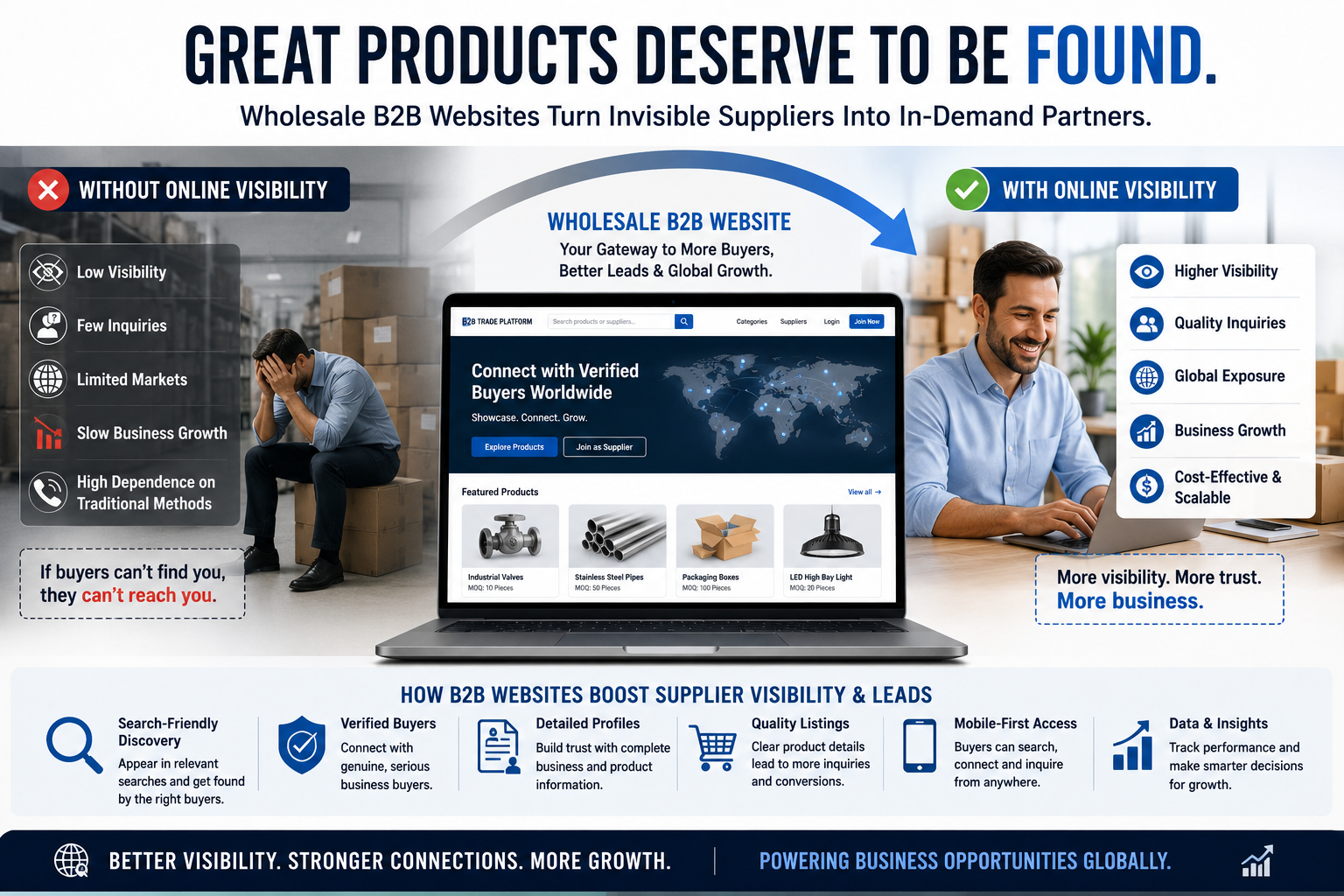
A surprising number of suppliers have the same frustrating problem.
They manufacture quality products.
They deliver on time.
Their customers are happy.
Yet somehow, buyers have never heard of them.
It's the business equivalent of opening the world's best restaurant in the middle of a forest and wondering why nobody shows up.
For decades, suppliers relied on trade shows, referrals, industry connections, and expensive advertising to generate new business. While those channels still have value, they often limit growth and make it difficult for smaller companies to compete with larger players.
Today, buyer behavior has changed.
Before speaking with a supplier, most B2B buyers now research products, compare vendors, review credentials, and validate credibility online.
The first sales conversation often happens long after the buyer has already made a shortlist.
This shift has made visibility one of the most important growth drivers in modern B2B commerce.
And that's exactly where wholesale B2B platforms come in.
Visibility Is No Longer a Marketing Metric. It's a Revenue Metric.
If buyers can't find you, they can't contact you.
It's that simple.
Supplier visibility impacts every stage of the buying journey:
Product discovery
Supplier evaluation
Trust building
RFQ submissions
Purchase decisions
Many small and mid-sized businesses offer products that rival industry leaders but remain largely invisible because they lack digital exposure.
The reality is harsh:
The best product doesn't always win.
The easiest supplier to find usually does.
Buyers Start with Search, Not Sales Calls
Modern procurement teams don't start by calling suppliers.
They start by searching.
Buyers look for suppliers based on:
Product categories
Industry requirements
Certifications
Geographic location
Minimum order quantities
Manufacturing capabilities
A well-structured B2B marketplace helps suppliers appear in those searches through optimized categories, searchable listings, and detailed product pages.
The result?
Higher visibility among buyers who are already looking for exactly what you sell.
Which is significantly better than convincing random people to care about your product.
Trust Begins Before the First Conversation
Most buyers won't contact a supplier they don't trust.
That's why supplier profiles matter.
A complete profile provides buyers with critical information upfront:
Company background
Product expertise
Certifications
Manufacturing capabilities
Export experience
Business history
Contact information
Think of your supplier profile as your digital first impression.
And unlike a sales rep, it works 24/7 without asking for coffee breaks.
The more complete and professional the profile, the more likely buyers are to engage.
Product Listings Are Your Silent Sales Team
For many suppliers, product pages are the first thing buyers see.
Good listings don't just describe products.
They answer questions before buyers ask them.
Strong listings typically include:
Detailed specifications
Product images
Material information
MOQ requirements
Packaging details
Delivery timelines
The fewer follow-up questions a buyer needs to ask, the easier it becomes for them to submit an inquiry.
Clarity accelerates confidence.
And confidence drives action.
Better Buyers Beat More Buyers
Many suppliers spend valuable time responding to inquiries that never turn into opportunities.
Fake requests.
Incomplete information.
Non-serious buyers.
The usual suspects.
Modern B2B platforms increasingly solve this problem through buyer verification systems.
These often include:
Business identity verification
Contact validation
Company profiles
Industry information
The result is simple:
Suppliers spend less time filtering leads and more time building real business relationships.
Mobile Buyers Are Everywhere
Procurement doesn't happen exclusively behind desktop monitors anymore.
Decision-makers are reviewing suppliers from airports, trade shows, meetings, and coffee shops.
If buyers struggle to navigate your profile on mobile devices, you lose opportunities before conversations even begin.
Mobile-friendly platforms allow buyers to:
Search products easily
Contact suppliers instantly
Compare vendors quickly
Submit inquiries from any device
Convenience has become a competitive advantage.
SEO Creates Visibility Beyond the Marketplace
The best B2B platforms don't just help suppliers get discovered inside the platform.
They also improve visibility in search engines.
Features such as:
Keyword optimization
Structured product pages
Search-friendly URLs
Fast page loading
Organized categories
help suppliers appear in Google searches and generate traffic organically.
Unlike paid advertising, organic visibility keeps working long after the campaign budget disappears.
New Industries Mean New Opportunities
One of the biggest advantages of digital marketplaces is unexpected discovery.
A supplier may join intending to serve one industry and suddenly attract buyers from three others.
For example, a packaging manufacturer might receive inquiries from:
Food companies
Cosmetic brands
Pharmaceutical businesses
Retail distributors
The broader the visibility, the greater the opportunity pipeline.
Data Turns Guesswork into Strategy
The smartest suppliers don't rely on assumptions.
They rely on data.
Modern B2B platforms provide insights such as:
Product views
Inquiry volume
Buyer locations
Popular categories
Engagement trends
These insights help suppliers improve listings, prioritize products, and focus on the opportunities generating the strongest interest.
Fast Responses Win Deals
Here's an uncomfortable truth:
Many buyers contact multiple suppliers simultaneously.
The first professional response often gains a significant advantage.
That's why modern B2B platforms provide tools such as:
Direct messaging
RFQ systems
Instant notifications
Email alerts
Mobile communication
Speed communicates professionalism.
And professionalism builds trust.
The Great Equalizer for SMEs
Large enterprises may have bigger marketing budgets and larger sales teams.
But digital marketplaces help level the playing field.
Visibility is increasingly determined by relevance, profile quality, responsiveness, and product information rather than company size alone.
That means smaller suppliers can compete effectively if they focus on:
Complete profiles
Strong product listings
Consistent communication
Verified business information
In many cases, buyers care less about company size and more about reliability.
Final Thoughts
Supplier growth is no longer driven solely by trade shows, cold outreach, or industry referrals.
Modern buyers expect transparency, accessibility, and credibility before initiating contact.
A strong wholesale B2B platform helps suppliers become easier to find, easier to trust, and easier to do business with.
The companies that invest in visibility today will generate more inquiries, stronger relationships, and greater growth opportunities tomorrow.
Because in B2B, being great is important.
But being discoverable is what gets you paid.
