
The 92% Problem: Why Your Pipeline Is Decided Before You Run Ads
Let’s start with an uncomfortable truth.
Most of your future pipeline has already been decided.
Not after someone clicks your ad.
Not after they download your whitepaper.
Not after they attend your webinar.
Before all of that.
Research from Bain and LinkedIn shows:
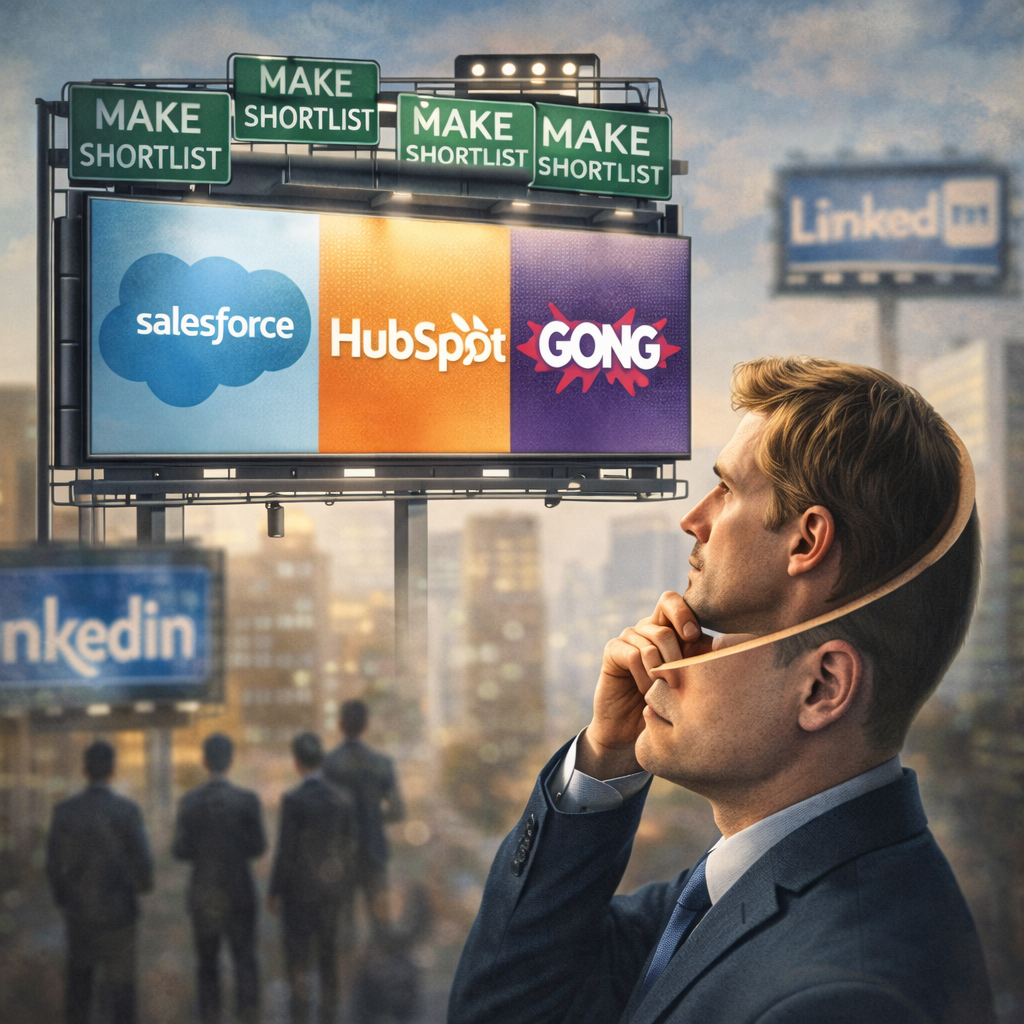
86% of B2B buyers already have a shortlist before they begin researching
92% of B2B deals go to vendors already on that shortlist
That means only 8% of deals go to vendors who weren’t already mentally “approved.”
Yet most B2B marketing teams behave like every deal is wide open.
It isn’t.
The Myth of the “Open Market”
Right now, a lot of B2B marketers feel like they’re fishing in an empty pond.
They’re running LinkedIn Ads like Google Ads:
Chase demand
Capture form fills
Optimise for cost per lead
Expect quick returns
But here’s the problem.
People don’t log into LinkedIn thinking:
“Today I will evaluate CRM software.”
They log in to:
Learn something useful
Connect with peers
Scroll between meetings
Quietly procrastinate
It’s not a search engine. It’s not a comparison site.
So when a real buying moment happens, something different occurs.
What Actually Happens Before a Demo Is Booked
A need appears.
Budget gets approved.
Someone says, “We need to fix this.”
And then?
They don’t open Google immediately.
They don’t download a whitepaper.
They don’t fill in your gated PDF form.
They ask themselves one very simple question:
“Who do we already know that does this?”
That internal shortlist — the 2–4 brands that come to mind instantly — is what Bain and LinkedIn call the Day 1 List.
And if you’re not on it, you are competing for leftovers.
The Shortlist Is Shrinking
Gartner data shows that B2B shortlists used to include around six vendors.
Today? Three or four.
That’s it.
Three or four mental slots.
Not ten.
Not “whoever responds fastest.”
Not “who has the best landing page.”
If you’re not one of those names already sitting in memory, your outbound, your ABM, your webinars — they’re all fighting for an 8% probability.
That’s not strategy. That’s gambling.
This Isn’t a Targeting Problem. It’s a Memory Problem.
B2B marketers love talking about targeting:
Firmographics
Job titles
Intent data
Buying signals
But getting onto the Day 1 List isn’t primarily about precision targeting.
It’s about memory.
When a buying trigger happens, buyers don’t scan the entire market. They retrieve brands from memory based on situation-specific cues.
The Ehrenberg-Bass Institute calls these Category Entry Points — the triggers that connect a buying situation to a brand.
For example:
“We need better pipeline visibility.”
Certain brands instantly appear.
“Our team’s project management is chaos.”
Specific tools come to mind immediately.
These associations aren’t built through one campaign. They’re built through repeated exposure over time.
The brand most strongly linked to the buying situation wins recall.
Everyone else competes for scraps.
Most LinkedIn Ad Strategies Are Backwards
Many brands treat LinkedIn like it’s Google.
They try to capture the 5% who are in-market right now.
But 95% of your future buyers are not actively shopping today.
They’re quietly forming opinions.
They’re building memory structures.
They’re deciding who “feels familiar.”
LinkedIn’s real power isn’t in capturing demand.
It’s in building mental availability months — sometimes years — before demand appears.
Think of LinkedIn Ads less like a lead gen form and more like a digital billboard that follows your entire category around.
What LinkedIn Ads Should Actually Be Doing
If your goal is to get on the Day 1 List, your approach needs to change.
1. Reach the Entire Category
You can’t predict when someone enters the market.
Targeting only high-intent users means you’re speaking to 5% of your future buyers.
The other 95% are forming memory associations now.
Reach the full category. Build familiarity before intent exists.
2. Optimise for Frequency, Not Just Clicks
Memory requires repetition.
One impression doesn’t build recall. Ten might.
Consistent exposure builds mental availability. Sporadic campaigns do not.
3. Run Always-On Campaigns
Stop-start advertising creates gaps in memory.
Strong brands show up consistently:
Same positioning
Same perspective
Same visual identity
Week after week.
Algorithms perform better. Memory structures strengthen.
4. Lead With Perspective, Not Product
Research shows 81% of winning vendors were known before formal evaluation began.
Not for features.
For having a point of view worth following.
On LinkedIn, thought leadership builds familiarity. Product-heavy ads build indifference.
5. Measure More Than Leads
If you optimise only for cost per lead, you will undermine long-term pipeline growth.
Track:
Reach
Category penetration
Unaided awareness
Share of search
These are leading indicators of future pipeline, not just immediate conversions.
The Real Question
When someone in your category says, “We need a solution for this,”
Does your name come up?
If not, the work starts long before your next campaign launch.
Pipeline is not built at the moment of need.
It’s built in the months and years before it.
