
How to Turn Customer Insights Into Content That Actually Converts
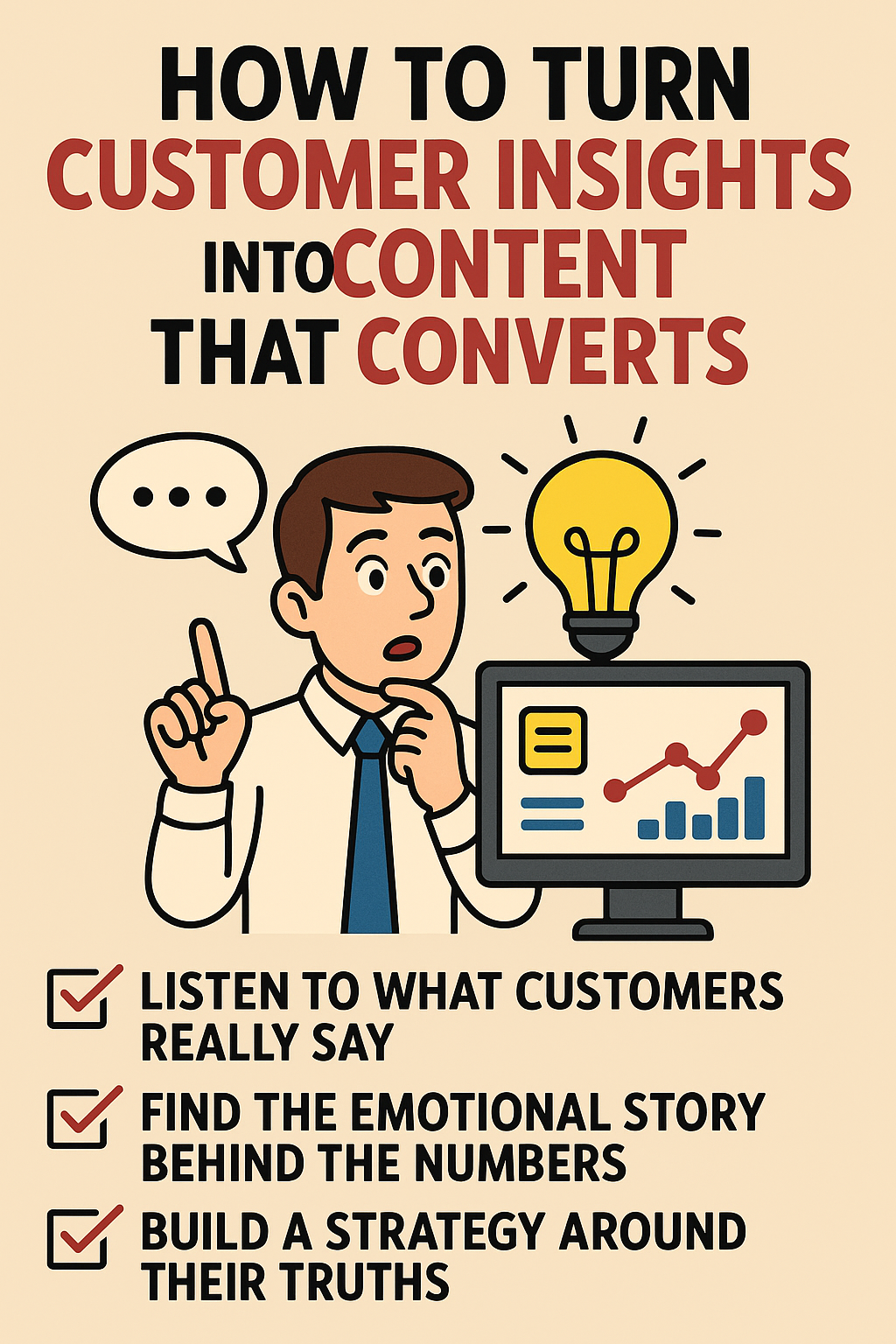
Marketers these days are drowning in data. Clicks, opens, scrolls, shares… dashboards that look like the cockpit of a spaceship. But here’s the thing: numbers alone won’t make your content better, and insights don’t automatically translate into action. Many brands are sitting on a goldmine of customer understanding that never sees the light of day. They know who their audience is, but they have no idea how to talk to them without sounding like a robot.
If you want your content to earn attention, build trust, and drive real action, it’s not enough to simply know your audience. You need to know how to use what you know. Here’s the playbook.
Listen Beyond the Numbers
Analytics are helpful, but they’re only half the story. Numbers can tell you what people clicked, but they can’t tell you why they clicked—or why they ran screaming from your last blog post.
Pay attention to how customers describe their problems in plain English. What do they gripe about on sales calls? What objections pop up just before a purchase? What makes your happiest customers gush about your product? Each of these moments is pure gold for content inspiration.
When someone says, “We just need to stop wasting time on manual reports,” that’s not idle chatter. That’s a headline, a blog post, or a killer social post waiting to happen. Data tells you what. Words tell you why.
Find the Emotional Angle in Your Data
B2B buyers may act like spreadsheets control their lives, but humans buy with feelings first. Confidence, pride, relief, maybe even a little smug satisfaction—these are the levers behind decisions.
Good content doesn’t just list stats. It taps into why those stats matter. A 15% churn reduction isn’t just a number—it’s about making teams feel in control, helping leaders celebrate wins, or giving marketers the freedom to experiment without sweating every dollar.
When your content reflects the emotions behind the numbers, your audience goes from “Meh” to “Yes, finally someone gets it.”
Build Your Strategy Around Customer Truths
Every buyer’s journey is a story. Align your content with what they think, feel, and need at each stage. Here’s a simple framework:
Awareness: Show you understand the pain they’re trying to solve.
Consideration: Paint the picture of what success looks like.
Decision: Prove it works with evidence—case studies, testimonials, data.
One client discovered their prospects weren’t searching for “AI-powered personalization,” they were searching for “why my product recommendations don’t match.” Adjusting the blog strategy to answer that question boosted conversions by 30%. Boom.
When you anchor your strategy in real customer truths, messaging, SEO, and sales enablement all align beautifully.
Match Insights to Content Formats
Not all insights are created equal, and not all content formats fit every insight. Map them wisely:
Objections: Case studies, FAQ pages, comparison guides. Show, don’t just tell.
Aspirations: Thought leadership, inspiring storytelling, visionary blog posts.
Frustrations: How-tos, templates, checklists—give instant relief.
Also, write like your customers talk. Match their vocabulary and tone. Make them think, “Hey, they get me.” That’s how you turn insight into credibility.
Measure, Iterate, Repeat
Content strategy isn’t a “set it and forget it” task. It’s a feedback loop. Track what resonates, what headlines get shared, what CTAs drive conversions. Then feed that back into your strategy.
The goal isn’t perfection. The goal is a living, breathing system that listens, learns, and adapts. Good content marketing informs. Great content marketing evolves.
The Real Conversion
At its core, content marketing isn’t about clicks or leads. It’s about connection. Understand your audience, and they’ll trust you. Earn trust, and they’ll listen. Listen, and they’ll act.
So, the next time you’re staring at a dashboard thinking “more data = better content,” remember: it’s not how much you know, it’s how well you use it.
Ready to turn insights into content that converts? Visit Great Scott! Content Marketing to see how strategy, storytelling, and a dash of humor can connect data to growth.
